
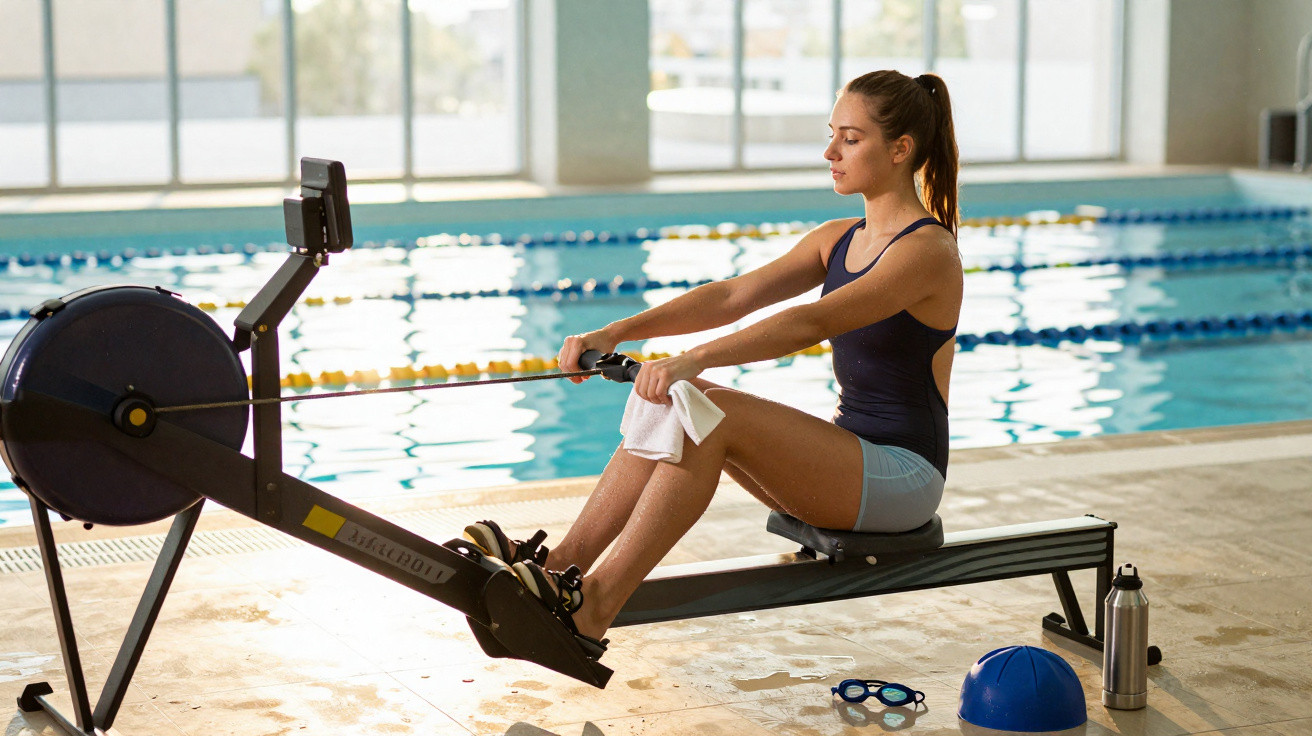
Swimming and indoor rowing make one of the most effective pairings for anyone who wants to build full-body strength without putting excessive stress on the joints. Whereas many forms of exercise focus effort on only a few areas or increase wear on the knees and hips, these two disciplines engage multiple muscle groups at once, boost cardiovascular fitness, and help you develop endurance in a safer way. That is why more and more people are choosing this combination to achieve well-rounded, lasting results.
Why is swimming considered such a complete exercise?
Swimming demands involvement from virtually every muscle in the body. Across different strokes, your arms, legs, back, core, and glutes work together to produce propulsion and maintain stability.
To clarify how this whole-body activation translates into everyday benefits, teacher Rodrigo Borges from the @CanalNadaMais channel put together a list of the sport’s main positive effects. You can see the full explanation by watching the video.
What are the main benefits of indoor rowing?
Indoor rowing has become popular because it delivers a hard, efficient workout in a short amount of time. With each stroke, you recruit the legs, hips, trunk, back, shoulders, and arms, creating a very broad muscular stimulus.
Among the most relevant benefits of this modality are:
- Overall muscular strengthening.
- Improved cardiovascular fitness.
- Low impact on the joints.
- High calorie burn.
- Development of physical endurance.
How does combining swimming and indoor rowing maximise results?
When these two activities are paired, their benefits naturally complement one another. Swimming supports mobility, muscular recovery, and general conditioning, while indoor rowing helps drive meaningful gains in strength and power.
This blend brings advantages that help explain its growing popularity, including:
- Balanced, full-body training.
- Lower risk of joint overload.
- Better posture and body stability.
- Increased cardiorespiratory capacity.
- Greater variety in training sessions.
What is the ideal frequency for strengthening the body without overloading the joints?
For most people, completing between three and five sessions per week is usually enough to achieve consistent progress. A highly effective approach is to alternate swimming sessions and indoor rowing workouts throughout the week, giving muscles and joints the recovery time they need.
Sessions can last from 30 to 60 minutes, depending on your current fitness level and personal goals. The key is to stay consistent and increase intensity gradually. With that balance, you can build strength, endurance, and overall fitness safely, making the most of what swimming and indoor rowing offer for the entire body.


Comments
No comments yet. Be the first to comment!
Leave a Comment