
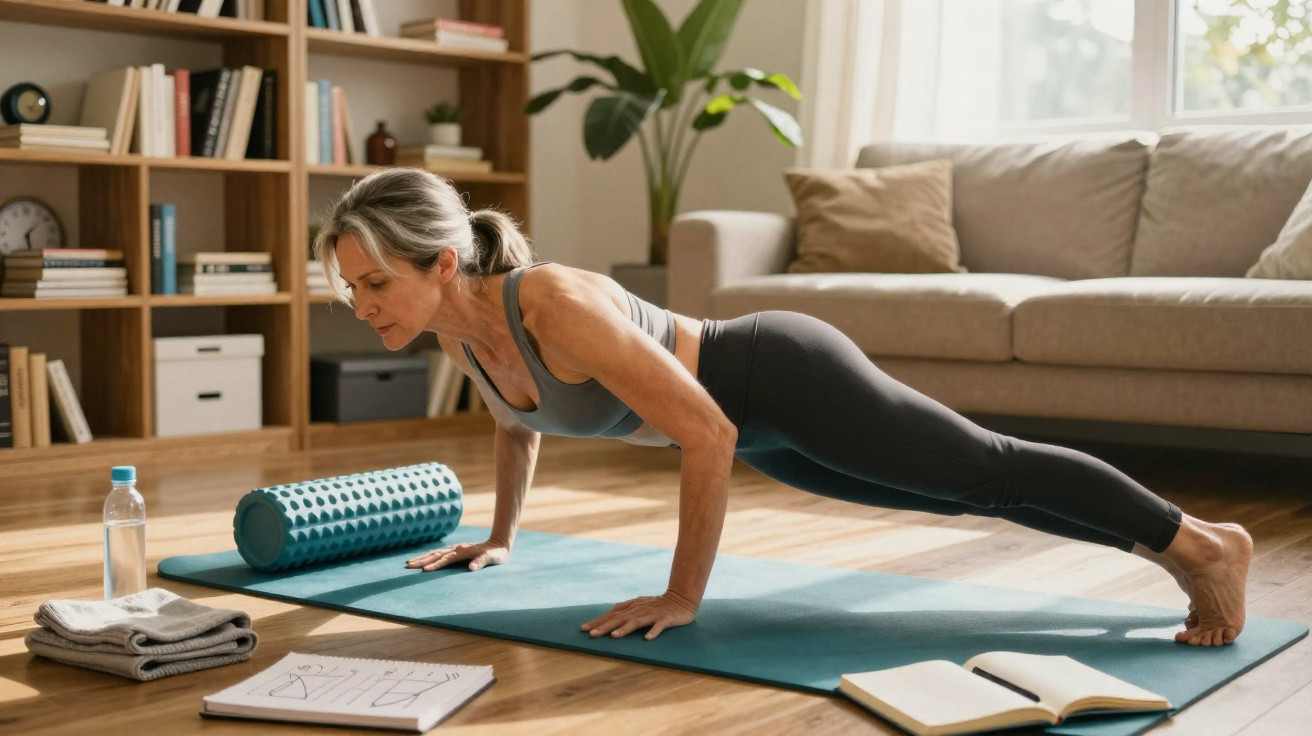
After turning 50, many people look for safer and more effective ways to achieve a firm, strong abdomen. Bodyweight training stands out because it allows controlled movement, well-aligned posture and less strain on the joints, making exercise more accessible at home. Beyond appearance, a stable trunk helps protect the spine, improves balance and makes everyday tasks easier-such as walking, climbing stairs or carrying shopping.
Why use bodyweight to strengthen the abdomen after 50?
Strengthening the abdomen after 50 calls for joint-friendly choices and close attention to posture. Using your own bodyweight makes it easier to adjust intensity by changing your position, range of movement or time under tension, supporting gradual, safe progress.
Many bodyweight movements also engage the deep core, helping to stabilise the spine, pelvis and hips. That can improve posture, may help reduce lower-back discomfort and makes it easier to train in almost any setting-something that greatly supports consistency.
Watch a video on the Saúde da Mente YouTube channel about how to activate the deep abdominal muscles through postural exercises to protect the spine from pain:
https://www.youtube.com/watch?v=N3b8K2m_L4o
Which abdominal exercises help protect the spine best?
Some traditional abdominal exercises that involve lots of trunk flexion can place extra stress on the lower back and neck. For that reason, trainers often prioritise planks, controlled leg raises and stability-focused movements, keeping the spine more neutral and well aligned.
Below are examples of widely used bodyweight exercises to make the abdomen firmer in later life, with emphasis on protecting the spine and controlling the movement:
- Front plank: in a press-up position, supported on forearms and toes, keeping the body in a straight line.
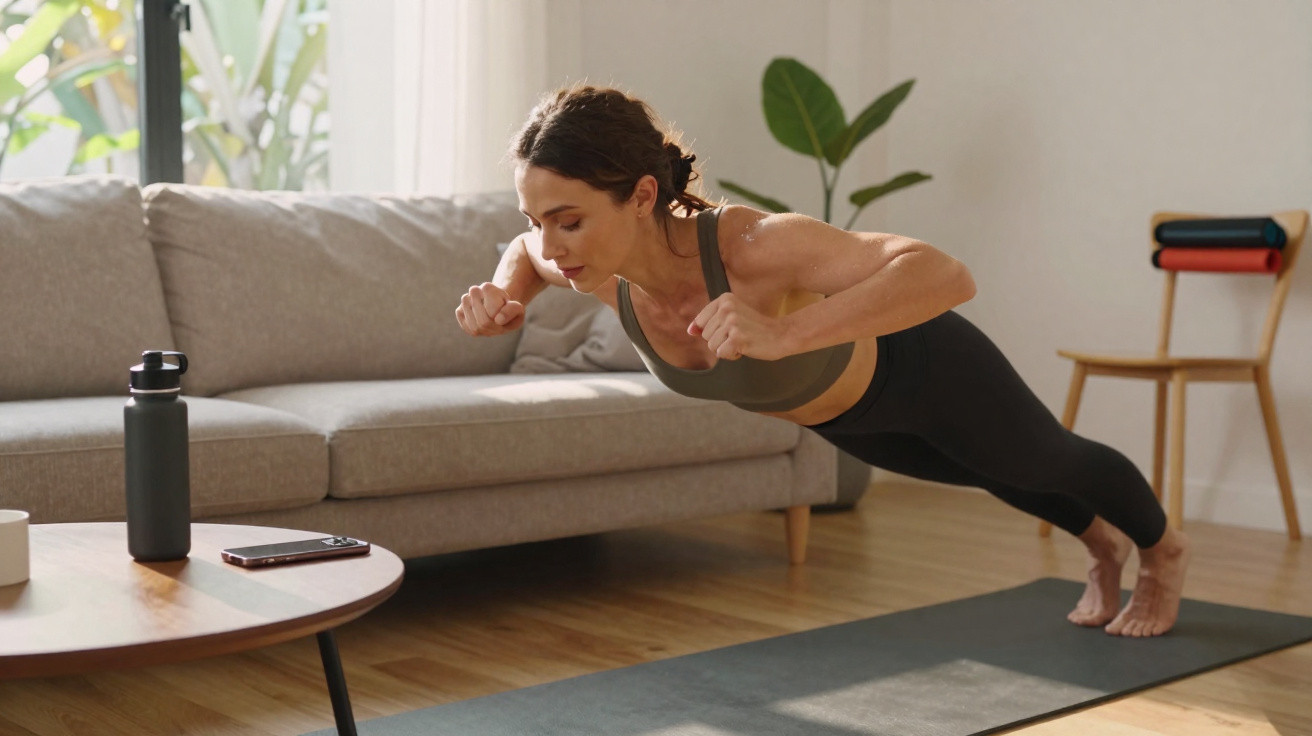
- Side plank: performed on one side, supported on one forearm and the outer edge of the feet or on the knees, building strength along the side of the trunk.
- Dead bug: lying on your back with arms and legs raised, alternating a slow lower of the opposite arm and leg.
- Glute bridge: lying on your back with feet planted, lifting the hips until a line forms from shoulders to knees.
How to put together an at-home routine for a firm, strong abdomen
Setting up a core workout at home can be straightforward, as long as you respect your own limits. A short warm-up-such as a few minutes walking indoors or marching on the spot-helps prepare the joints before you start.
A simple sequence can include planks, dead bug and glute bridge for 2 to 3 sets each, with 30 to 45 seconds of rest. Over time, you can progress by holding planks for longer, increasing repetitions or shortening rest periods-always keeping good technique as the top priority.
What precautions keep abdominal training safe after 50?
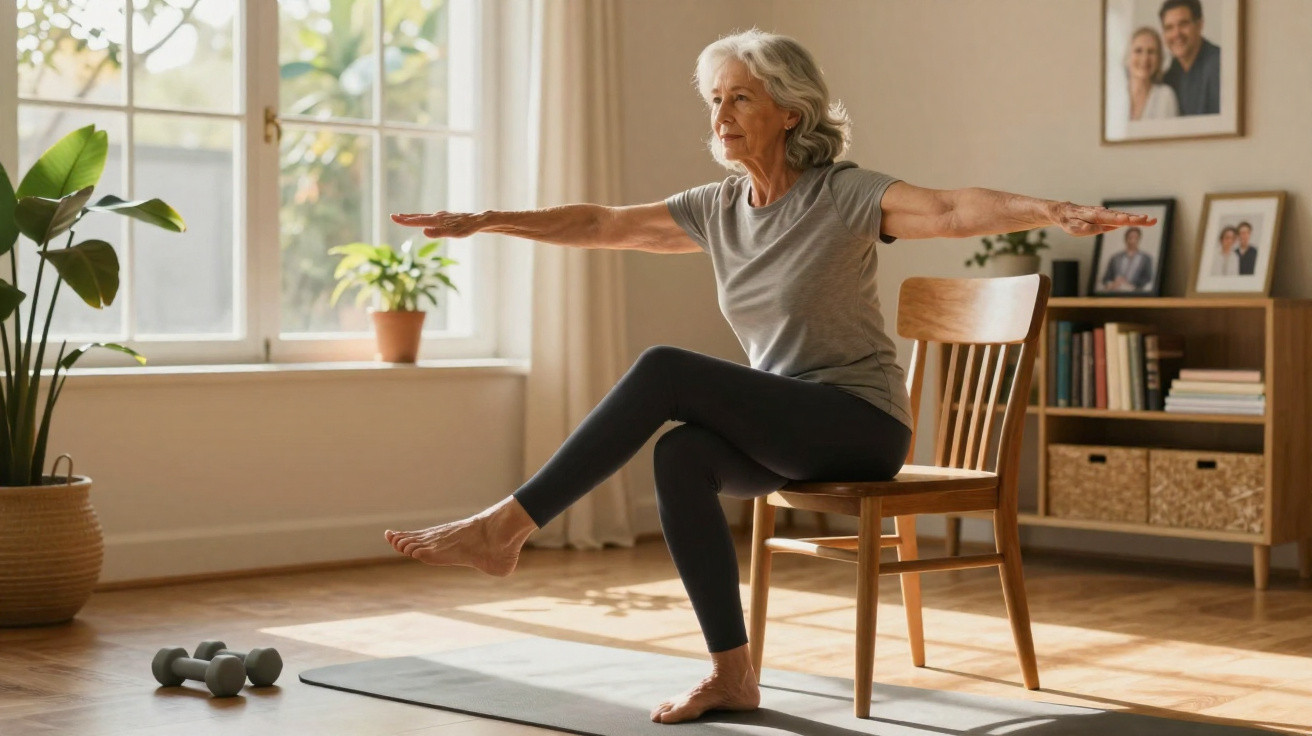
Even with bodyweight exercises, it is crucial to pay attention to your body’s signals. A history of severe back pain, recent surgery or joint disease warrants medical assessment and, where possible, guidance from a qualified fitness professional before starting or increasing training.
During practice, focus on pain-free movement (no sharp pain), steady breathing and slow progression. Pairing abdominal work with walking, gentle stretching, regular sleep and a balanced diet supports a more stable trunk and a day-to-day routine with greater comfort and independence.


Comments
No comments yet. Be the first to comment!
Leave a Comment