
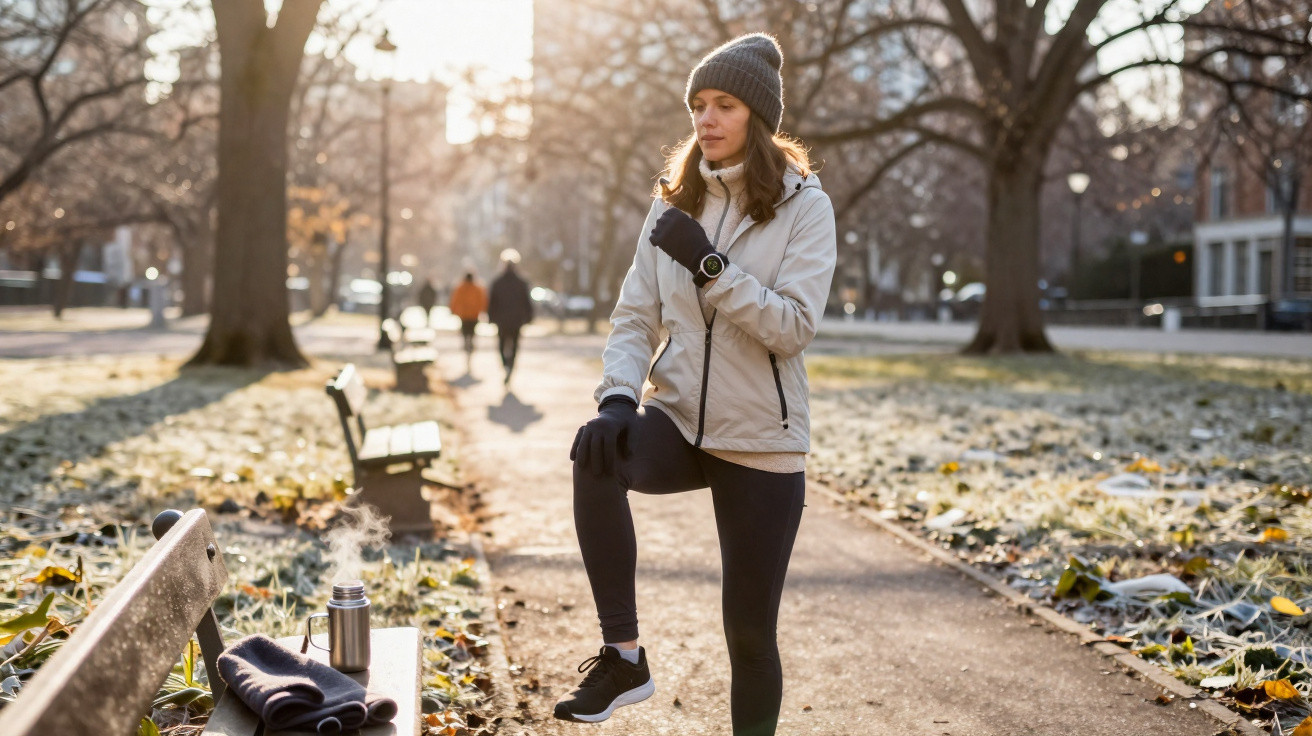
Keeping up a walking routine on cold days can be tough for anyone trying to build a regular exercise habit. Rather than relying only on bulky coats, specialists recommend prioritising a proper warm-up and using clothing layers strategically. With that approach, low temperatures become manageable without derailing your physical activity routine.
Why is warming up essential for walking in cold weather?
When you move from resting to exertion in low temperatures, your body needs time to adjust. Blood vessels tend to narrow and muscles can feel stiff, which makes the first few movements less comfortable and calls for a more gradual start to your walk.
If someone simply puts on lots of clothing and heads straight outside, the body can still be “cold” on the inside. Within minutes, you may overheat, sweat more than necessary, feel weighed down by heavy layers, and become more likely to stop the session-or experience a sudden chill if you remove items too quickly.
How to do a gradual warm-up before your walk
A warm-up does not have to be long, but it should follow a straightforward progression that matches your current fitness level. A physical education professional registered with CREF can tailor timing and intensity, while keeping an eye on posture, breathing, and any signs of discomfort.
A simple warm-up outline-suitable for professional adjustment-includes easy steps that raise your internal temperature without causing early fatigue:
- Gentle joint movements: slow circles of the shoulders, hips, and ankles for 1 to 2 minutes.
- Marching on the spot: lift the knees slightly, with the arms moving naturally, for 2 to 3 minutes.
- Short, slow steps: begin walking at an easy pace, without focusing on distance or time.
How to choose clothing layers for walking in the cold
The right outfit helps balance warmth with freedom of movement. Instead of a single very heavy item, it is better to wear removable layers that you can adjust as your body warms up during the route.
In general, organising clothing in layers makes it easier to unzip or take off items without becoming fully exposed to the cold. Gloves, a hat, and suitable socks can also help-so long as you use them flexibly and remove them if you start to feel too warm.
Why consistency matters more than burning calories
On cold days, many people fixate on calories burned or the speed they reach, but CREF-registered professionals emphasise that regular practice is what matters most. Frequent walks, even at a gentler pace, tend to produce longer-lasting benefits than intense efforts done only occasionally.
By sticking to your routine and adjusting duration, pace, and warm-up appropriately, your body gradually adapts to colder conditions and the initial discomfort often eases. With professional guidance, you can define the best warm-up duration, clothing choices, and ideal intensity-making winter a productive time to reinforce the habit of walking with safety and planning.






Comments
No comments yet. Be the first to comment!
Leave a Comment