
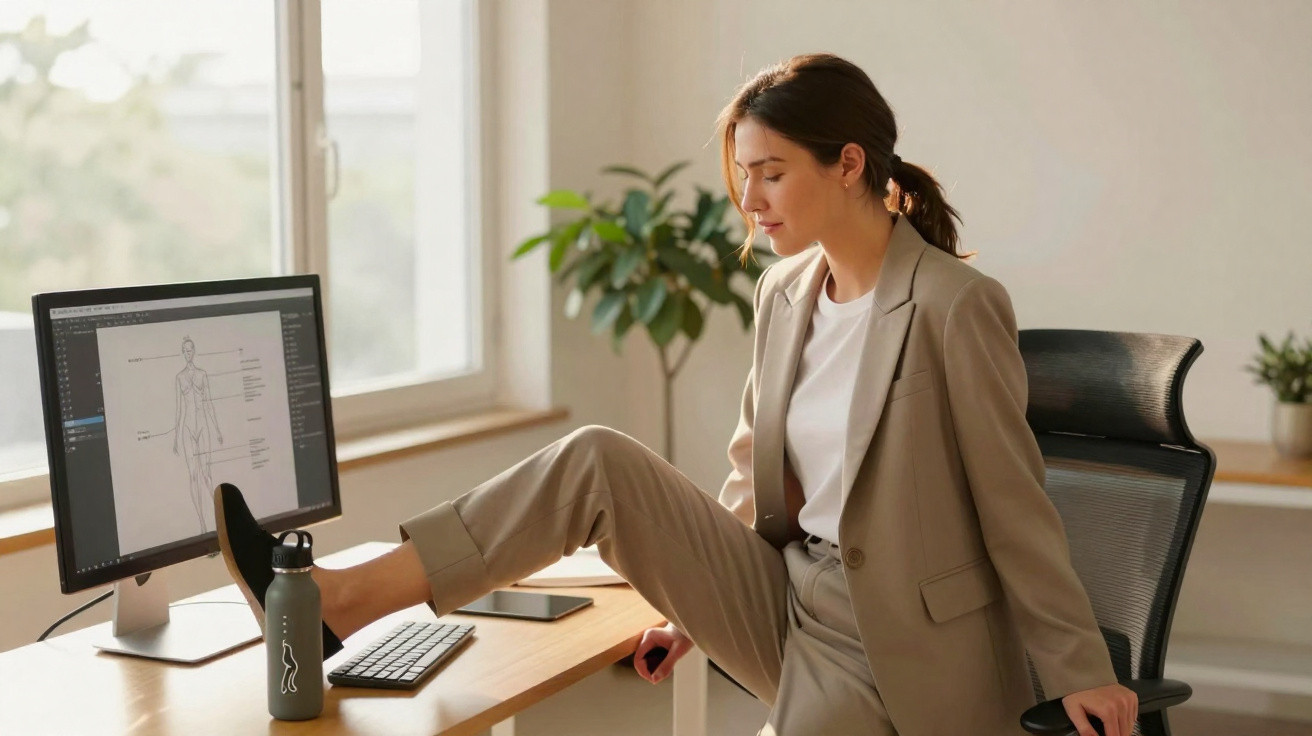
Sitting with your legs crossed is a familiar habit at work, at home and even when relaxing. Although many people find it comfortable, staying in that position for a long time can contribute to aches and muscular strain - especially when it becomes a daily routine.
According to Gilson Gonçalves de Andrade, a lecturer on the Physiotherapy course at Unopar, the issue is not crossing your legs now and then, but remaining in the same position for too long and failing to keep your body moving throughout the day.
“There is no evidence that crossing your legs for a few minutes causes permanent damage. What deserves attention is how long someone stays in the same posture. The body was made to move, and prolonged time in any position can create discomfort and overload,” he explains.
Below, the specialist highlights the main effects this habit can have when it becomes frequent.
1. It may contribute to muscle pain and postural changes
Keeping your legs crossed for extended periods can place extra load on the lower back, hips and pelvis. It may also encourage muscular imbalances if you always cross the same leg over the other.
2. Circulation may be temporarily reduced
When you cross your legs, blood vessels can be mildly compressed, which may lead to tingling or numbness after a while. This effect is usually short-lived and tends to resolve once you change position.
3. It can make venous return more difficult
People with venous insufficiency, varicose veins or other vascular conditions should avoid spending long periods with their legs crossed, as the posture may increase discomfort and hinder venous return.
Although this is a common belief, there is no scientific evidence that crossing your legs causes varicose veins. Factors such as genetic predisposition, a sedentary lifestyle, obesity, pregnancy, and spending many hours sitting or standing play a greater role in the development of the condition.
Take breaks and keep your body moving
As well as avoiding staying in one position for too long, Gilson Gonçalves de Andrade advises taking brief breaks during the day to stand up, walk around and stretch. “Regardless of the posture you choose, sitting for many hours in a row is the main problem. Taking regular breaks to move improves circulation, reduces stress on the joints and supports the health of the spine and muscles,” he advises.
The specialist also stresses that adopting good ergonomics makes a difference. Keeping your feet flat on the floor, supporting your back properly against the chair, and frequently alternating how you position your legs are simple steps that can ease discomfort and help protect musculoskeletal health day to day.
By Letícia Zuim Gonzalez


Comments
No comments yet. Be the first to comment!
Leave a Comment