
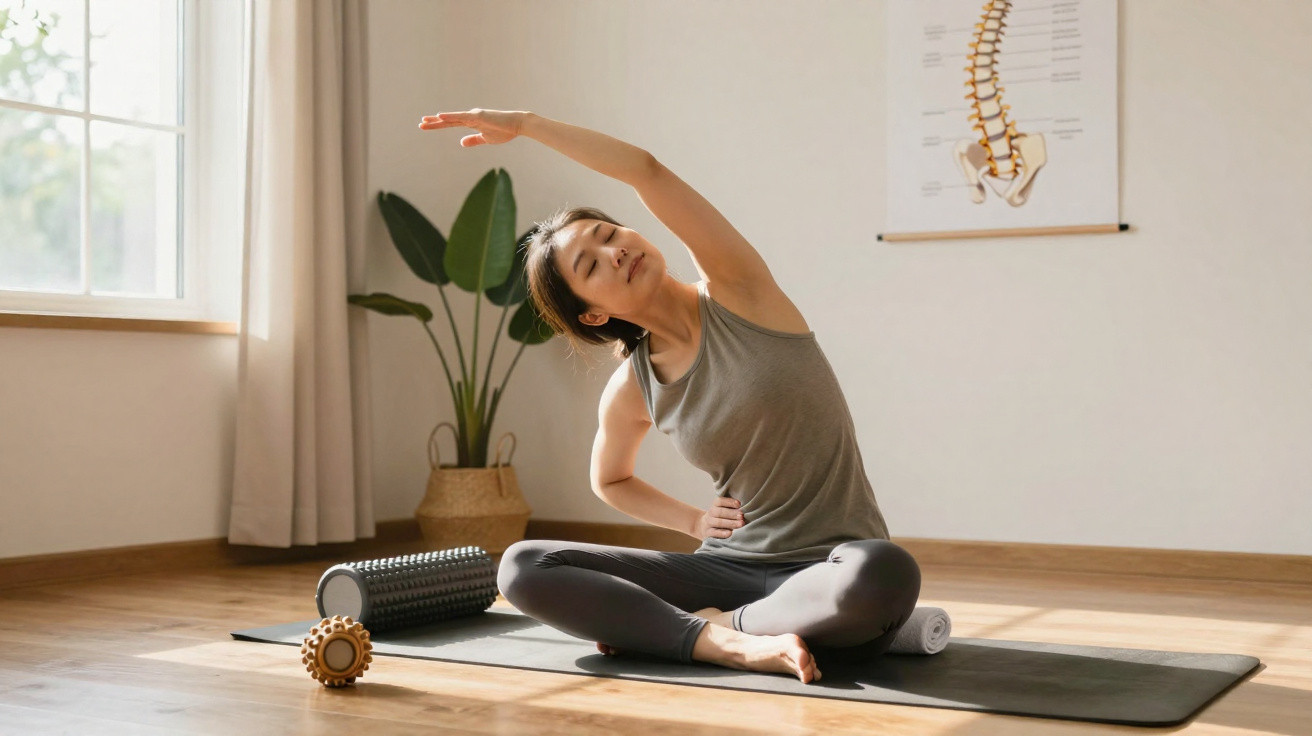
The 6 gentle exercises for the spine are an easy, practical option for anyone dealing with back pain, muscular stiffness, or tension linked to a sedentary routine. With straightforward movements you can do at home, you may improve mobility, support better posture, and lessen the way stress affects your body. Doing them each day helps the muscles unwind and can make everyday tasks feel more comfortable-particularly if you spend many hours sitting down.
Why does sitting for long periods cause back pain?
Sitting for extended stretches increases pressure on the lower back and can encourage weakening of key muscles that help support the body. Over time, this may lead to recurring discomfort and changes in overall posture.
On top of that, limited movement reduces blood flow and makes it easier for muscular tension to build up. This combination can bring on aches, a heavy feeling in the back, and even difficulty with simple movements throughout the day.
Which 6 gentle exercises for the spine are most recommended?
Certain movements are widely recommended by specialists because they help stretch and strengthen muscles without requiring any equipment. They can be done in just a few minutes and are simple to fit into your routine.
If your main aim is spinal health and easing day-to-day tension, it is worth following the Physiotherapy with Kelwin Juan channel. In the video, the specialist demonstrates 5 simple exercises, including the well-known “cat and cow” pose, which are ideal for improving mobility at home.
How do these exercises help reduce stress?
Stress often triggers involuntary muscle tightening, especially in the shoulders, neck, and back. When that tension lingers, it can turn into pain and a constant sense of physical fatigue.
Practising these movements regularly supports muscle relaxation and can improve breathing. Key benefits include:
- Less tension built up over the course of the day.
- Improved blood circulation.
- A stronger sense of wellbeing.
- Greater body awareness and better postural balance.
- Reduced muscular stiffness.
How often should the exercises be done?
The best frequency varies from person to person, but most physiotherapists suggest short sessions carried out daily. Setting aside five to ten minutes a day can already help deliver noticeable improvements in mobility and physical comfort.
What matters most is staying consistent and performing the movements in a controlled way. Over time, these exercises can help protect spine health, improve posture, and ease pain associated with a sedentary lifestyle. If symptoms are severe or do not go away, an assessment by a health professional is essential to identify the underlying cause and recommend the most appropriate treatment.






Comments
No comments yet. Be the first to comment!
Leave a Comment