
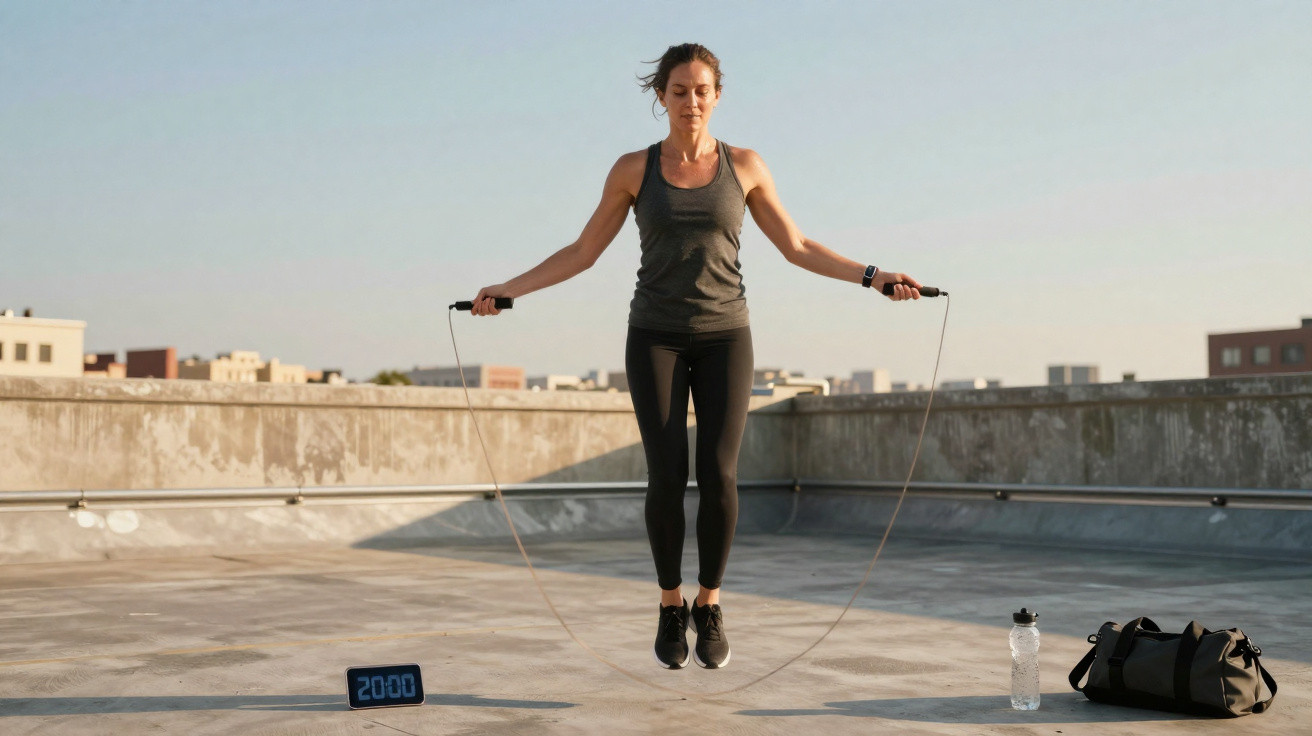
If you’ve ever tried skipping rope as an alternative to the gym and wondered whether it’s actually worth it, the answer is yes - with one important caveat: duration and pace are what make it work. Once you understand what your body is doing during the session, the way you train changes completely.
The threshold between effort and results
Your body follows a clear order when it comes to burning fat. In the opening minutes of aerobic exercise, it prefers glycogen - the energy stored in your muscles and liver. Only after that initial supply starts to run down does it begin to tap body fat as the main fuel source. With skipping rope, that switch typically happens after about 15 to 20 minutes of continuous activity.
Short sessions of five or ten minutes do burn calories, but they barely touch fat stores. The metabolic threshold simply isn’t reached. It’s like accelerating a car to just below cruising speed and turning the engine off before you get there: the effort is real, but you never arrive.
- ⏱ 20 continuous minutes: the minimum time for your body to begin burning fat efficiently during a skipping-rope session
- Glycogen first: in the first 15 minutes, your body uses stored sugar before accessing body-fat reserves
- Steady cadence: keeping the rhythm consistent matters as much as total time, because long interruptions reset the metabolic process
- Joint impact: beginners need to adapt technique to protect knees and ankles during longer sessions
- Gradual progression: increasing time and intensity week by week is the key to consistent results without injury
The right cadence for each fitness level
The ideal cadence for skipping rope changes a lot depending on your current fitness. If you’re new to it, aim for 60 to 80 jumps per minute - a comfortable rhythm where you could still hold a conversation. That’s enough to raise your heart rate without triggering early fatigue, which is the main enemy of anyone trying to reach 20 minutes without stopping.
If you’ve already got some experience, 80 to 110 jumps per minute tends to be the most productive working zone. At an advanced level, sessions above 120 jumps per minute push the workout towards something close to high-intensity training. Whatever your level, the goal is the same: choose a pace you can maintain for the entire session. Going too fast in the first five minutes and stopping at eight is the most common mistake.
20 minutes in practice: how to build a session from scratch
Putting together a 20-minute skipping rope session as a beginner is more about smart planning than brute force. The trick is to break the total time into smaller blocks that, together, create the continuous workload you need to reach the fat-burning metabolic threshold - without overloading your knees and ankles.
Beginner session structure
Split the 20 minutes into blocks with short pauses
Start with 3-minute blocks of skipping, followed by 30 seconds of walking on the spot. Repeat that cycle six times to complete the session. These very short breaks keep your heart rate up without wiping out the metabolic effort, while also reducing cumulative impact on your joints.
In the first few days, wear trainers with good cushioning and skip on a firm surface - but not bare concrete. Compacted grass, rubber flooring, or wood are the best options. As your conditioning improves, gradually shorten the breaks until you can manage 20 minutes fully continuous within six to eight weeks.
Posture is part of the equation too. Keeping your shoulders relaxed, elbows close to your body, and landing softly on the balls of your feet can reduce joint impact by up to 40% compared with sloppy technique. Starting with good form prevents pain and helps you avoid the overuse injuries that often happen when people ramp up too quickly.
What changes in your body after a few weeks
With regular skipping rope practice, your body adapts in ways that go far beyond a single bout of fat burning. Your cardiovascular capacity improves, your basal metabolism increases, and you begin to use more energy even at rest. In practical terms, future sessions feel progressively easier and the results become more noticeable.
Another often-overlooked change is stronger calves, quadriceps, and core muscles, which work together to stabilise every jump. That added strength helps protect your knees and ankles over time, making the exercise feel safer as your fitness level rises.
Skipping rope versus the gym: when the rope wins
From a cost-to-benefit perspective, skipping rope is hard to beat. A decent rope costs less than a monthly gym membership and can be used almost anywhere with around 3 metres of headroom. The calorie burn in a well-executed 20-minute session is comparable to running at a moderate intensity for the same amount of time, which puts skipping among the most time-efficient aerobic exercises.
Practising skipping rope consistently, with solid technique, is one of the most accessible ways to improve fitness and manage weight without relying on expensive equipment or fixed timetables. The key is to respect the 20-minute minimum and keep your cadence appropriate to your level, rather than trying to rush the process.
If this helped you understand how to get more from a simple, affordable exercise, share it with someone who’s also looking for practical ways to move more day to day.






Comments
No comments yet. Be the first to comment!
Leave a Comment