
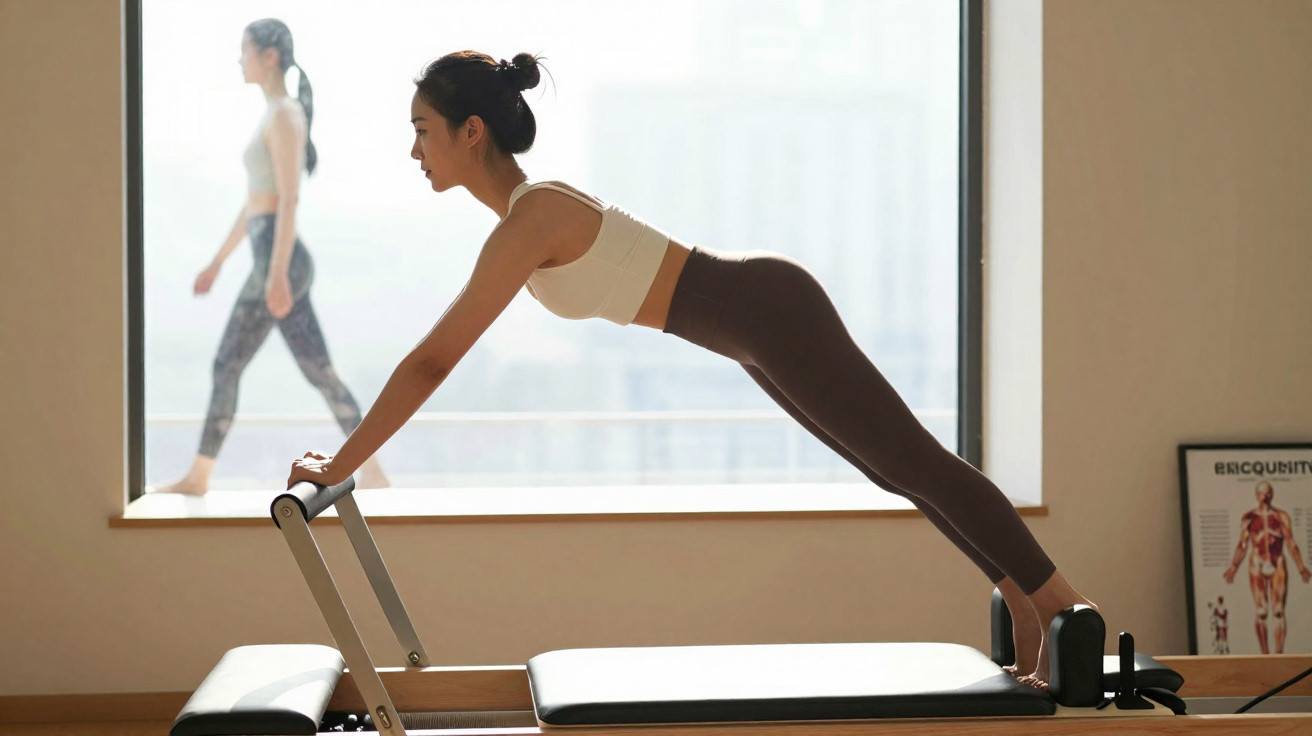
Nora Ruiz, a Pilates instructor, highlights a frequent mistake in walking mechanics: many people try to ‘work around’ tight hamstrings by moving their lower back too much as they walk. This habit can make your stride less efficient, increase stress through the back, and mask limited mobility in the legs.
Why do the hamstrings affect walking so much?
The hamstrings sit along the back of the thigh and help bend the knee, extend the hip, and regulate how the leg swings and lands with each step. When they are shortened or overly tense, the leg loses range of motion and the body searches for another way to complete the movement.
With that compensation, the lumbar spine can end up moving more than it should. Instead of the hips and the back of the thighs doing the work smoothly, the back gets pulled into the action and takes on load that was never meant for it.
How can you tell if your lower back is compensating when you walk?
This kind of compensation does not always show up as immediate pain. Often it appears as stiffness after walking, a heavy feeling in the back, or difficulty keeping a natural stride without excessive trunk sway.
- the pelvis rocks a lot with every step;
- the lower back feels tired before the legs do;
- the stride feels short even at an easy pace;
- there is tightness behind the thighs when climbing stairs or hinging the torso forwards.
What is the Elephant exercise in Pilates?
The Elephant exercise is a Pilates movement that focuses on lengthening the posterior chain, controlling the trunk, and organising spinal alignment. It is commonly used to improve hamstring mobility while paying close attention to pelvic position and the alignment of the lower back.
In practice, Nora Ruiz points to this kind of exercise because it teaches the body to fold from the hips rather than from the back. That distinction matters for people who walk with stiff legs and end up using the lumbar spine as a shortcut.
What precautions help loosen the back of the thigh?
Before pushing into intense stretching, it is best to notice how your body responds. Tightness at the back of the thigh can come from limited mobility, too much time spent sitting, poorly balanced training, or weakness in the muscles that stabilise the hips.
- stretch the hamstrings without forcefully locking the knees;
- keep your breathing slow throughout the movement;
- avoid rounding the lower back too much just to reach the feet;
- seek guidance if there is radiating pain, tingling, or ongoing discomfort.
How can you improve your stride without overloading your back?
Improving the way you walk involves restoring leg mobility and improving control at the hips. When the hamstrings stop restricting the stride so strongly, the lower back no longer has to compensate on every step and the trunk tends to stay steadier.
Pilates supports this because it combines strength, stretching, and body awareness in the same session. With exercises such as the Elephant, people learn to separate movement at the hips, spine, and legs-an essential skill for walking with less tension through the back.
Comments
No comments yet. Be the first to comment!
Leave a Comment