
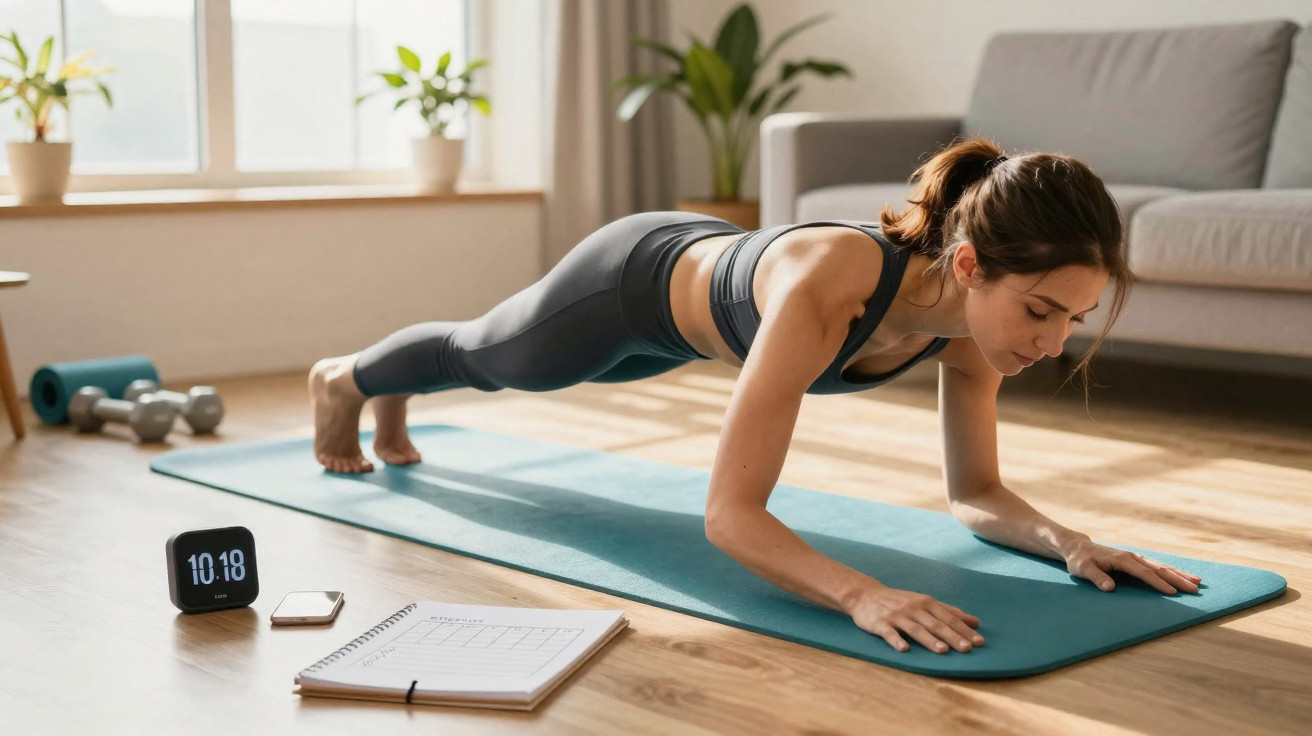
Doing 20 minutes of plank a day, 5 days a week, adds up to roughly 400 minutes a month of isometric core work. The comparison with 1,000 crunches is eye-catching, but the real takeaway is the quality of the stimulus: the plank engages the abdominals, lower back, glutes, shoulders and stabilisers, whereas the traditional crunch concentrates effort mainly on trunk flexion.
Why does the plank work the core more completely?
In a plank, you have to hold your body against gravity without letting your hips drop, your lower back arch, or your shoulders cave in. That demand for control switches on the transverse abdominis, rectus abdominis, obliques, multifidus, glutes and shoulder girdle all at the same time.
Harvard Health notes that the plank recruits a broader balance of muscles across the front, sides and back of the body than exercises such as sit-ups, which target fewer muscle groups. That helps explain why it is so widely used to support stability, posture and spinal protection.
How do 20 minutes a day add up to a strong accumulated workout?
Those 20 minutes of planking do not need to be done as one uninterrupted hold. The safest approach is to split the time into short blocks with breaks, so you can keep good form and reduce the risk of overloading the shoulders, wrists and lower back.
- Beginners: 8 to 12 sets of 15 to 30 seconds.
- Intermediate: 8 to 10 sets of 30 to 45 seconds.
- Advanced: sets of 45 to 60 seconds, alternating front plank and side plank.
- Rest: 20 to 40 seconds between sets, keeping breathing controlled.
Why is it not worth swapping technique for time?
Holding a crooked plank for a long time trains your body to compensate. If your lower back sags, your neck tightens, or your hips lift too high, the exercise stops building stability and becomes little more than endurance in a poor position.
Harvard’s practical guidance for core work is to aim for a 30 to 60 second hold per repetition, then build the required volume through multiple sets. If you are just starting out, four repetitions of 15 seconds can be more beneficial than one long attempt with a broken posture.
How should you spread planks across the week?
A stronger routine uses 5 training days and 2 recovery days, rotating variations so the same points of support are not stressed every time. The front plank can feature on three days; the side plank and a knees-down plank fill out the others.
- Monday: front plank in short blocks.
- Tuesday: side plank, alternating sides.
- Wednesday: front plank with fewer sets and a technique-first focus.
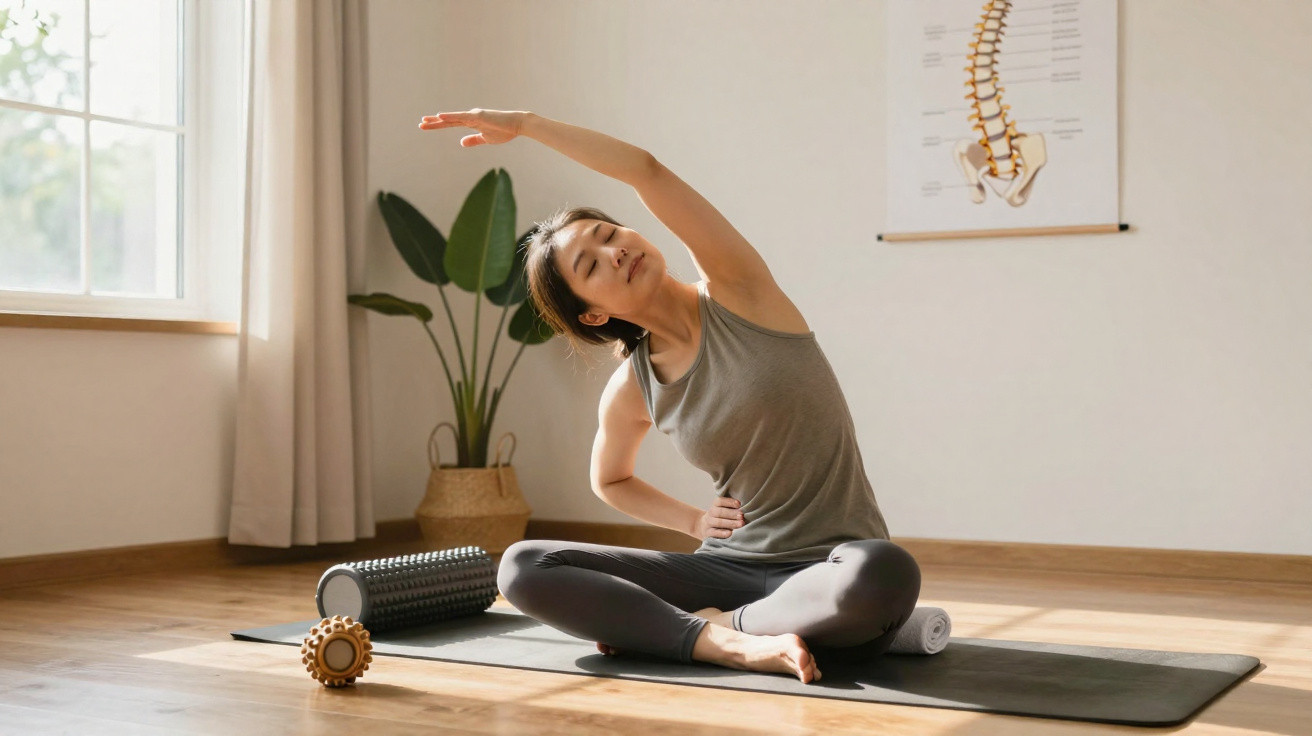
- Thursday: rest or light hip and thoracic spine mobility.
- Friday: combined front and side planks.
- Saturday: knees-down version or a short plank for motor control.
- Sunday: complete rest if there is fatigue in the shoulders or lower back.
The core improves when stability becomes a habit
The plank can change posture, balance and stability because it trains your body to hold alignment under tension. After weeks of practice, everyday tasks such as walking, climbing stairs, carrying a backpack or sitting for longer periods often require less compensation from the lower back.
The best results come from gradual progression: begin with short sets, breathe without holding your breath, stop before your form falls apart, and only increase time once you can maintain a clean line from shoulders to ankles. If there is sharp pain, tingling, dizziness or persistent discomfort in the lower back, stop training and have it assessed by a professional.

Comments
No comments yet. Be the first to comment!
Leave a Comment