
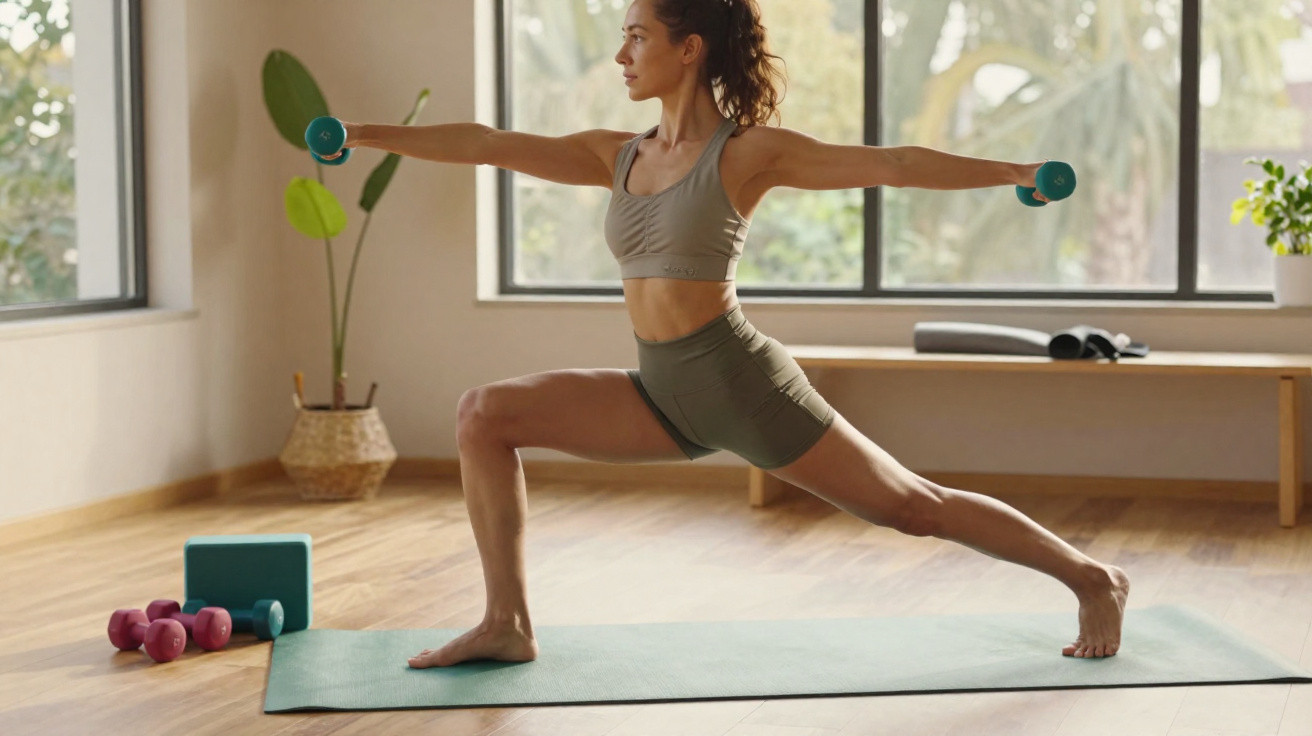
Yoga can improve flexibility, breathing and body awareness, but visible looseness in the thighs usually needs a more targeted muscle stimulus. When the aim is to firm the area, strength and stability training becomes the priority.
Why is the quadriceps so important for the thighs?
The quadriceps femoris sits at the front of the thigh and spans much of the femur. It is made up of the rectus femoris, vastus lateralis, vastus medialis and vastus intermedius-an arrangement that underpins its key role in extension and overall movement.
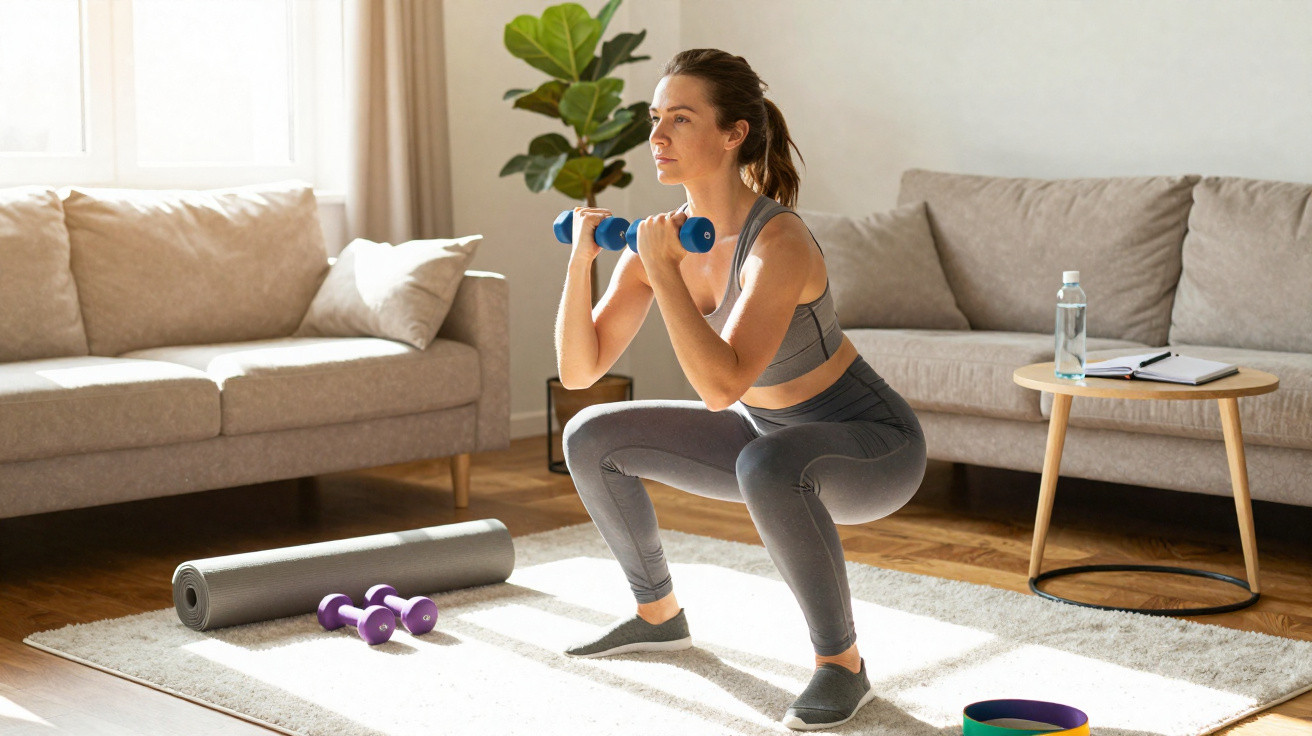
That placement also clarifies why yoga and stretching can boost mobility yet still fail to create enough tension for muscular adaptation. By contrast, squats and lunges load the thigh against resistance, demanding control and allowing progression on every repetition.
The key points become clearer when you look at what each element contributes:
- Yoga: supports flexibility, balance and body awareness.
- Quadriceps: works mainly to extend the knee.
- Resistance: provides a more direct trigger for muscle adaptation.
- Squat: challenges the thighs, hips and whole-body control.
- Lunge: requires stability and strength in each leg.
What does the quadriceps do during leg movement?
From an anatomical perspective, the quadriceps is among the strongest muscle groups in the human body and helps shape the front and outer portions of the thigh. For that reason, developing this area calls for appropriate load and solid coordination.
The rectus femoris also assists with hip flexion, while the quadriceps as a whole is chiefly responsible for knee extension. You rely on this action when sitting down, standing up, climbing stairs and training legs through a suitable range of motion with good depth, safety and controlled technique.
Which exercises train this muscle group best?
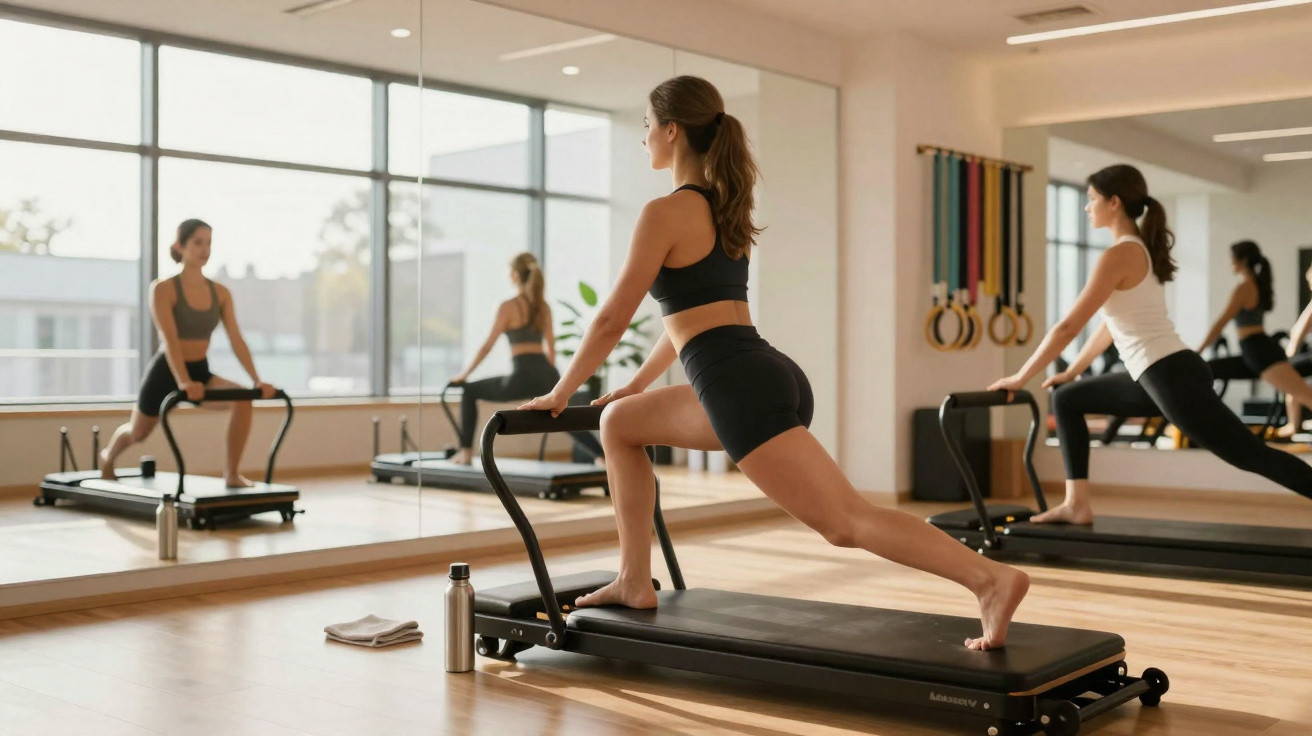
If you want to tone the thighs more efficiently, the training has to create repeated contraction and a steadily increasing challenge. The squat involves both knee flexion and extension, whereas the lunge places greater demands on balance and control between the hip, thigh and lower leg.
Progressive strength for the thighs
The stimulus needs to be specific
Stretching can improve mobility, but strength depends on muscle contraction against resistance, with sound technique, control and gradual progression.
Squats and lunges make it possible to adjust depth, stance/support and difficulty, which helps the session fit more easily into your routine.
This kind of stimulus does not need to be intense from day one. Progress can come from well-executed repetitions, a gradual increase in volume, and light loading-always prioritising technique and recovery to avoid overloading the area.
To get started more safely:
- Do squats through a comfortable range of motion.
- Use support if balance is still a challenge.
- Do not hold your breath during the movement.
- Increase repetitions and load only gradually.
How can you combine yoga and strength without overdoing it?
Yoga remains valuable because it enhances flexibility, balance, breathing and body awareness. Those improvements can help prepare the body for resistance work, but they do not, on their own, replace a muscle-building stimulus aimed at toning and resistance.
When mobility and strength are trained together, the routine tends to feel more complete. Stretching supports smoother, more comfortable movement, while squatting, stepping into lunges and holding positions against resistance promotes muscle mass and functional capacity in active thighs.
A balanced routine might include:
- Yoga days focused on mobility and body awareness.
- Strength days using squats, lunges and simple variations.
- Breaks between tougher sessions to allow recovery.
- Attention to persistent pain, technique breakdown or excessive fatigue.
Why is strength more effective than chasing fast aesthetic results?
For anyone looking for a realistic routine, the most sensible approach is to start with simple, progressive variations. This strategy for addressing looseness in the legs is most effective when it prioritises consistency and safety, rather than immediate aesthetic urgency.
The main point is to respect your body while strengthening the muscles steadily. Yoga can continue as a support for mobility, while squats and lunges provide direct work for the quadriceps-helping with posture, control and day-to-day independence.
Comments
No comments yet. Be the first to comment!
Leave a Comment